
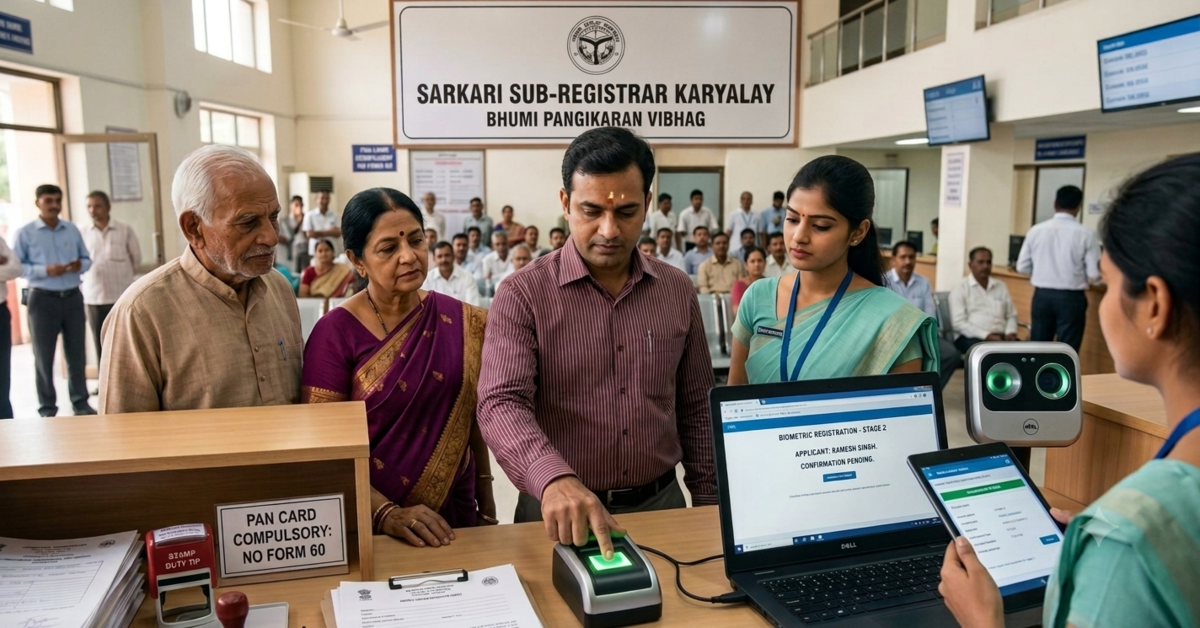
The Uttar Pradesh government has introduced significant changes to the property registration process by making Aadhaar-based authentication mandatory for property transactions. The new rule is aimed at improving transparency, preventing fraud, and ensuring secure ownership verification.
With this initiative, buyers, sellers, and witnesses involved in property registration will be required to complete Aadhaar-based identity verification before the registration process can be finalized.
What Has Changed?
Under the revised property registration rules, all parties involved in a property transaction—including the buyer, seller, and witnesses—must verify their identity using Aadhaar authentication. Biometric verification, such as fingerprint authentication, may also be required during the registration process.
Without successful Aadhaar verification, the property registration process cannot be completed.
Key Benefits of the New Rule
The updated regulations offer several advantages for property buyers and sellers:
- Reduces the risk of fraudulent property transactions.
- Ensures the identity of the actual property owner.
- Prevents fake documentation and impersonation.
- Improves transparency in the registration process.
- Strengthens digital property records.
- Helps reduce property-related disputes.
Documents Required for Property Registration
Before registering a property in Uttar Pradesh, ensure you have the following documents:
- Aadhaar Card
- PAN Card (where applicable)
- Original property ownership documents
- Sale Deed
- Identity proof of the buyer and seller
- Identity proof of witnesses
- Other documents as required by the local registration office
Who Will Be Affected?
The new Aadhaar verification requirement applies to all property transactions in Uttar Pradesh, including:
- Residential Houses
- Flats and Apartments
- Residential Plots
- Commercial Properties
- Agricultural Land
- Shops and Offices
Every buyer, seller, and witness participating in the registration process must complete Aadhaar-based authentication.
Why Has the Government Introduced This Rule?
The Uttar Pradesh government aims to create a more secure and transparent property registration system. By integrating Aadhaar authentication, authorities seek to eliminate fraudulent registrations, protect genuine property owners, and build greater public confidence in real estate transactions.
The initiative also supports the government’s broader goal of digitizing land records and modernizing property-related services.
Final Thoughts
If you are planning to buy or sell property in Uttar Pradesh, it is important to understand the updated registration requirements. Aadhaar-based verification is now a mandatory part of the process, making property transactions safer, faster, and more transparent.
Before visiting the registration office, make sure all required documents are ready and your Aadhaar details are up to date to ensure a smooth registration experience.